
The economic aspect of breweries also contributes to their burgeoning popularity. The beer industry offers considerable financial opportunities, with breweries generally outperforming restaurants and bars in terms of profitability. Properly managed breweries can emerge as highly successful business ventures, boasting impressive profit margins of 25% or even higher.
How do you calculate beer prices?
More detail may be preferable, howeverthis will take more time for your bookkeeper to record the transactions intothe proper accounts. Start with the kind of reporting you need to see in yourfinancial statements and build the chart of accounts accordingly. Now that we’ve covered thebasic financial reports, let’s look at examples of what brewery incomestatements should look like. The 1,000 BBL taproom could borrow upwards of $1 million, and its annual debt payments total $170,000. This again is a big chunk of the $300,000 of EBITDA calculated above. Check out this Taproom Sales Calculator to estimate revenue and yield per barrel.
How to Increase Beer Sales
Exploring the profitability of a brewery involves delving into various elements such as brewery annual revenue, brewery profit margin, and brewery ROI. The craft brewery industry has witnessed significant growth, yet it comes with its complexities and financial intricacies. When comparing the profitability of food trucks to traditional restaurants, it’s essential to consider the average revenue and the average costs involved. Food trucks can make an average profit that often exceeds that of many small to medium-sized restaurants, primarily due to lower operating costs.
Smart WiFi Marketing
In this article we’ll look at the financial metrics of the taproom compared to distribution. We’ll also give some tips on how to set up your financial reporting so that you can see the actual profitability of your taproom. Assuming that you’re profitable is one thing, but seeing is believing. And that goes for liquor pricing and wine by the glass pricing, too. Don’t be afraid to try a combination of these strategies and figure out which works best for you.
- Potential food truck operators seeking unique or less-tapped culinary areas can succeed.
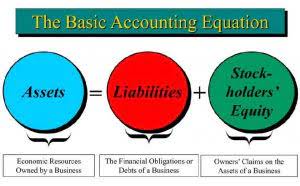
- The income statement, balance sheet andstatement of cash flows are reports that summarize those numbers.
- Some bottles and cans of macro brew can be marked up to 500% because they’re so cheap wholesale.
- Firstly, direct sales from taprooms or onsite bars present a primary revenue channel.
- Rotating your offer also lets you experiment with different types of beers at more premium prices.
- Understanding profit margins is important for breweries because it allows them to identify areas where they can cut costs and increase profitability.
So, first, let’s have a brief overview of the profitability of the brewing industry. The average profit margin for craft breweries is approximately https://www.bookstime.com/ 14.7% in general. If we compare the business model of a brewery with those of restaurants or bars, then it is more profitable than the latter two.
Maximizing Brewery Profits for a Long-Term Success

As we just saw, breweries typically have rather high gross margins (~70%). Indeed, a big part of expenses are actually fixed costs (salaries, marketing, etc.). Microbreweries can have higher profit margins due to their focus on specialty and craft beer, but they may have lower turnovers compared to larger breweries. Reducing production costs while maintaining quality is crucial for improving brewery ROI. Investing in more efficient brewing equipment or optimizing ingredient procurement can lower operational costs.

Sell directly to consumers
Euroboozer, a UK importer of craft-brewed beers, states that for a London pub or bar gross profit has to be around 70% in order to be sustainable. On average, it costs between $93,500 and $118,500 a month to run a 2,000 barrels p.a. For more information on how much it costs to run a brewery, read our article here.
- For one, breweries require a lot less staffing than restaurants or cafes.
- Operating expenses include all the costs to run the taproom-only brewery aside from the actual cost of the beer.
- Implementing appropriate software solutions can greatly enhance transparency by tracking costs, income streams, and various other financial aspects.
- For example, it costs you $30 to make a six-pack of beer and you want to make a profit of $15 on each sale.
- Nope, they have to put it back into the business year after year to keep growing and meeting demand.
- In 2019, off-trade sales trumped on-trade sales by 700,000 pints in the UK.
The Most and Least Expensive Cities for Michelin-Starred Restaurants
Use the same method as either bottled beer or craft beer but introduce higher overhead charges or markup. This is because installing and maintaining a draft system is costlier than ordering bottles or cans. You’ll also need to take into account spillage, over-pouring and spoilage — this happens more often when brewery accounting serving draft beer than with canned or bottled beer. MIT Sloan Management Review reveals that retailers who price differently across all channels see bottom-line growth of 2-5%. The key challenge is understanding what your customers want in each channel and how that affects what they’re willing to pay.
- It all comes down to your creativity and establishing multiple streams of income.
- The income statement records sales when earned, and expenses whenincurred, regardless of whether cash was received or paid out.
- Once you have the cost of the beer, it’s time to layer in the cost of the packaging materials.
- Thus, food service establishments and bars should benefit from some of the techniques to sell more beer.
- Australia’s beer sector is a significant driver of economic activity and domestic jobs, from farming, brewing, packaging, and distribution.
- To maximize profits you need to improve visibility and control over your restaurant or bar’s inventory.
More importantly, they were willing to spend a little extra to maintain this image. Beer and pubs contribute £22.9 billion annually to the country’s economy. Because you must at least cover all fixed costs (that aren’t a function of revenue) to turn a profit, the break-even point is at least superior to the sum of your fixed costs. For example, if you sell 150 barrels in a month orders in a day with an average price per barrel of $800, monthly revenue is about $120,000. In order to calculate profits for a brewery, you must first forecast revenues and expenses.
Set up the financials to track taproom results
For example, Daisy is a brewpub owner and she orders packs of beer from her brewer for $150, and wants to have a pour cost of 20%. She determines her price by dividing the cost of her drinks by the target pour cost, which arrives at the price of $7.50 per beer. For mature segments in the industry, premiumisation corresponds to a desire for authenticity, where consumers want a clearly defined local origin.
Deja una respuesta
Lo siento, debes estar conectado para publicar un comentario.